

How Should Foreign Trade Companies Respond To Trump’s Tariff Policy?
Background of the additional tariffs:
·Economic benefits
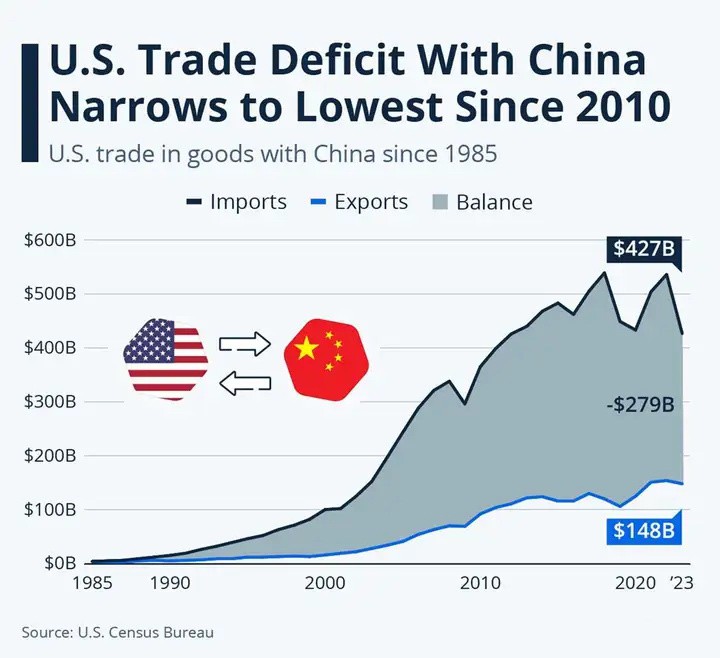
① Long-term trade deficit : The United States has a long-term trade deficit, especially with some major trading partners such as China, the European Union, Mexico, Canada, etc. Trump believes that the trade deficit is the "bleeding point" of the US economy and regards it as one of the main reasons for the decline in the competitiveness of the US economy and industry.
② Domestic industry pressure : Some traditional industries in the United States, such as steel and automobiles, are facing international competition pressure. The domestic industry hopes that the government will take measures to protect the domestic market and employment opportunities. Trump hopes to support these industries by imposing tariffs.
③ Political campaign promises : During his campaign, Trump repeatedly promised to take tough trade measures to reduce the trade deficit, protect American workers' jobs, and bring manufacturing jobs back to the United States.
④ Changes in the international economic landscape : With the evolution of the global economic landscape, the rise of emerging economies poses a certain challenge to the economic hegemony of the United States. Trump is trying to reshape the United States' position in the global economy through trade protectionism.
·Political purpose
① Fulfilling campaign promises : Trump promised to take tough trade measures during his campaign, and the imposition of tariffs is seen as a landmark action to fulfill these promises.
② Consolidate the voter base : Trump has used tariff policies to consolidate voter support in manufacturing states such as the "Rust Belt" (such as Michigan and Ohio), which are important voting bases for him.
③ Diverting domestic conflicts : Blaming the US economic problems on "unfair international trade" to divert public attention from structural problems such as domestic inflation and debt, while shaping its tough image of "fighting external threats"
·Strategic and diplomatic factors
① As a bargaining chip : Trump uses tariffs as a tool of diplomacy and trade negotiations, forcing other countries to make concessions on issues such as trade, immigration, and drug control by threatening to impose additional tariffs.
② Contain competitors : Especially in response to China's technological rise, Trump has tried to curb China's development through measures such as tariffs and the "Entity List" to ensure the United States' hegemony in the economic and technological fields.
③Reconstructing global trade rules : Trump tried to break the multilateral system under the WTO framework and turn to a bilateral negotiation model to achieve the strategic goal of "America First".
④ Maintain the United States' global influence : Undermine the stability of the global supply chain through tariffs, attempt to weaken the power of other countries, and ensure the United States' dominant position in the global economy.

In the early morning of April 3rd, Beijing time, the moment that the global market had been anxiously waiting for finally arrived.
This day is called "Liberation Day" by US President Trump. Trump has previously announced many times that he will announce the imposition of so-called large-scale "reciprocal tariffs" on all global trading partners on this day.
According to reports, the "reciprocal tariffs" include two executive orders: one is to announce that the United States will establish a 10% "minimum benchmark tariff" on its trading partners, and the other is to impose higher tariffs on certain trading partners.
The so-called higher tariffs mean that the United States will impose 20% retaliatory tariffs on the European Union country by country, 24% tariffs on Japanese imports, 25% tariffs on South Korean imports, 26% tariffs on Indian imports, 46% tariffs on Vietnam, 10% tariffs on imports from Brazil, the United Kingdom, Ukraine, Singapore and other countries, 31% tariffs on Swiss imports, 49% tariffs on Cambodia, 36% tariffs on Thailand, 30% tariffs on South Africa, 32% tariffs on Indonesia, and 34% tariffs on China...
White House officials said the lowest base tariffs will take effect at dawn on April 5, Eastern Time, and reciprocal tariffs will take effect at dawn on April 9.
Trump also announced a 25% tariff on imported cars, which will take effect at dawn on April 3, Eastern Time. "From today on, we will not let anyone tell us that American workers and families cannot have the future they deserve. We will produce the cars, ships, chips, planes, minerals and medicines we need right here in the United States."
There is widespread concern that Trump's tariff policy will fail to meet expectations and will instead severely damage the economy and trade of the United States and even the world.
After the announcement of the "reciprocal tariffs", global financial markets fluctuated violently, and US stock futures collectively plunged. Nasdaq futures fell by 4%, S&P 500 futures fell by more than 3%, and Dow futures fell by 1.8%. Apple fell 7.5% after the market, Tesla fell 5%, and Nvidia fell 4.4%. Spot gold rose slightly.
No country is exempted
After taking office, Trump proposed the concept of "reciprocal tariffs."
"The simple answer is if they charge us, we charge them," Trump said in February, after suggesting several times that the United States did not intend to exempt any country.
Under the "no exemption" principle, cross-border flows of everything from auto parts to agricultural products will face reassessment, and the White House's "deliberate indifference" to stock market fluctuations suggests that there may be deeper political considerations behind this economic game.
The global impact of reciprocal tariffs:
Estimates show that if the United States implements this policy on all countries, the global gross domestic product (GDP) will evaporate by more than US$725 billion.
Developing Economies of the Japan External Trade Organization ( JETRO ) analyzed the impact of reciprocal tariffs on countries around the world, automobile tariffs, and the 20% additional tariffs that have already been implemented on China on the world economy. The estimated results show that these tariffs will cause the global GDP to be reduced by 0.6% in 2027. The International Monetary Fund ( IMF ) forecasts that the global GDP in 2025 will be 120 trillion US dollars. A simple calculation shows that the "0.6%" is equivalent to 725 billion US dollars.
The impact of reciprocal tariffs on China's economy:
In 2024, China will export 524.7 billion US dollars to the United States and import 163.6 billion US dollars from the United States, with a trade surplus of 361 billion US dollars with the United States, accounting for 36.4% of China's total surplus of 992.1 billion US dollars and 2% of China's GDP. However, if we add in exports to the United States through ASEAN and Mexico, China's actual surplus in exports to the United States may reach 480 billion US dollars, accounting for 48.4% of China's total surplus and 2.6% of China's GDP.
In the most optimistic scenario, if the Sino-US trade surplus is reduced by only one-third after the implementation of the reciprocal tariffs, China's GDP will be reduced by 0.9%. In the pessimistic scenario, if the Sino-US trade surplus is reduced by one-half, China's GDP will be reduced by 1.3%.
Impact of reciprocal tariffs on the United States:
Many researchers believe that Trump's tariffs will lead to a sharp increase in the prices of goods imported by the United States from China and other countries, and the profits of American companies that rely on Chinese-made parts will be squeezed. The US economy will fall into recession. Some predict that the US GDP will fall by 1%-2.5% as a result.
JPMorgan Chase Research has lowered its forecast for U.S. real GDP growth through 2025 due to increased trade policy uncertainty, the impact of existing tariffs, and retaliatory measures from foreign trading partners. It now expects U.S. real GDP growth to be 1.6% this year, down 0.3% from previous estimates. This 0.3% is the negative impact of tariffs on the United States.
In the first year of implementing reciprocal tariffs, domestic substitution in the United States cannot be put in place immediately. The average tariff suddenly increased from 3.3% to 29%, which will inevitably push up inflation in the United States. This is the basic economic logic of tariffs - raising tariffs will increase the price of imported goods, and higher prices will cause people to buy less. If Americans buy fewer foreign goods, then the US trade deficit with other countries will shrink.
But most products have a high degree of substitutability. Therefore, in Trump's reciprocal tariff rate list, the tariffs of different countries are different, most of them are 10%, the EU, Japan and South Korea are about 25%, ASEAN is 35%-50%, and China is 34%+20%, totaling 54%.
This differential tariff brings about a greater degree of substitutability. Before domestic substitution is established in the United States, American importers will reduce their purchases of goods from high-tariff countries and increase their purchases of goods from low-tariff countries. Therefore, the actual tariff rate in the United States may be much lower than 29%. The impact on retail prices is unlikely to be as great as it appears on the surface.
At the same time, the reduction of the US trade deficit means less outflow of US dollars. Non-US currencies, especially those that are not freely convertible to the US, will inevitably appreciate the US dollar and depreciate their own currencies due to the reduction of trade surpluses and the reduction of US dollar inflows. The appreciation of the US dollar will also offset part of the impact of tariffs on prices.
Reciprocal tariffs may have a positive impact on the economies of South Korea, Japan and the European Union :
Most people certainly believe that Trump's reciprocal tariffs, which actually increase tariffs on all countries, should have an impact on all countries.
According to estimates by the Yale University Budget Lab , Trump's tariffs will push up Japan's economy by 0.2%, South Korea's by 0.5%, and the European Union's economy by possibly 0.1%.
According to analysis, since reciprocal tariffs are a mechanism for imposing the same tariffs as the trading partner, the impact on countries with lower tax rates is smaller. It will also cause demand shifts.
The United States imposes high tariffs on Chinese goods, and Chinese goods are no longer popular. However, because Japanese, Korean and EU products are highly substitutable with Chinese products, once the tariff difference with China can make up for the offshore price difference, the price in the United States will be lower than that of Chinese products, and sales will increase. Therefore, the Yale University Budget Lab believes that reciprocal tariffs will have a positive impact on Japan, South Korea, the EU, etc.
"Europe has not started this confrontation," von der Leyen said at a European Parliament meeting in Strasbourg, France on April 3. "We do not necessarily want to retaliate, but if necessary, we have a strong retaliation plan and we will use it. Europe has many cards, from trade to technology to the size of our market. But this advantage is also based on our readiness to take firm countermeasures if necessary. All tools are on the table."
The impact of reciprocal tariffs on traditional foreign trade companies:
① Rising costs and shrinking profits : The imposition of tariffs directly leads to an increase in the cost of export goods, especially for small and medium-sized enterprises with lower profit margins. For example, the high tariffs imposed by the United States on China have weakened the price competitiveness of Chinese export goods in the US market, and some orders have even been transferred to low-cost regions such as Southeast Asia.
② Decreased orders and shrinking market share : Tariff barriers have caused US buyers to turn to other countries for purchases, and the order volume of Chinese export companies has dropped significantly. Companies that rely on the US market face the risk of shrinking market share, and some traditional manufacturing companies are even forced to reduce or stop production, resulting in increased employment pressure.
③Increasing pressure to adjust the supply chain : In order to avoid tariffs, some companies have tried to move their production lines to Southeast Asia or Mexico, but this process requires a lot of money and time investment. For small and medium-sized enterprises with tight capital chains, supply chain adjustments are difficult and unlikely to be achieved in the short term.
④ Opportunities for diversification of export markets : Although the U.S. market has been impacted, Chinese foreign trade companies have reduced their dependence on the U.S. single market by actively exploring other markets, such as countries along the "Belt and Road" and ASEAN. China's exports to the United States as a share of total exports have dropped from nearly 20% in 2018 to about 13% in 2023, while exports to ASEAN and countries along the Belt and Road have grown significantly.
of reciprocal tariffs on cross-border e-commerce companies :
① Logistics costs and profit margin compression : The increase in tariffs has led to a significant increase in the logistics costs of cross-border e-commerce, especially for goods in the direct mail model. The tariff costs are directly passed on to consumers or companies. Some cross-border e-commerce platforms have to increase their prices, but this may lead to consumer loss.
② Increased compliance risks : U.S. customs has stepped up inspections on goods from China, which has extended customs clearance times and even resulted in goods being detained or returned. This not only increases the operating costs of cross-border e-commerce, but may also lead to a decline in customer satisfaction.
③Intensified market competition : Tariff policies have caused some cross-border e-commerce companies to turn to other markets, such as Europe and Southeast Asia, but competition in these markets is already fierce. How to gain a foothold in new markets has become a major problem facing cross-border e-commerce companies.
Coping strategies:
·Diversified market layout
① Expand emerging markets : Reduce dependence on the US single market and actively explore emerging markets such as countries along the Belt and Road, ASEAN, South America, the Middle East and Africa. For example, China's export growth to ASEAN in 2024 exceeded the overall level, and the RCEP rules can be further used to optimize the regional supply chain in the future.
② Strengthen cooperation with major customers : By connecting with major customers in the industry, jointly analyze the market situation, formulate order plans, deepen cooperation, and stabilize market share.
③ Localized production and sales : Establish production bases in target markets or cooperate with local companies to get closer to the market and reduce transportation costs and tariff risks. For example, TCL has increased its brand influence in the African market by co-building a factory in South Africa.
·Optimize supply chain management
① Capacity transfer : transfer part of the mid- and low-end production capacity to Southeast Asia, South Asia and other regions with low labor costs and preferential trade policies, while retaining domestic high-end manufacturing links.
② Procurement diversification : Increase the proportion of raw material procurement from local and third countries to reduce dependence on a single market.
③ Overseas warehouse and logistics optimization : Utilize overseas warehouses to dynamically allocate inventory, combine air-sea transport and other methods to optimize transportation routes, and reduce customs clearance fees and warehousing costs.
·Product upgrade and innovation
① Improve product added value : Increase R&D investment, improve product technology content, design and overall added value, and enhance brand bargaining power. For example, the export of "new three things" such as new energy vehicles and lithium batteries has continued to grow, becoming an important support for risk resistance.
② Focus on core advantage categories : optimize product portfolio, cut inefficient marginal products, and focus on core advantage categories.
·Policy support and enterprise collaboration
① Utilize government policies : The government implements policies such as export credit insurance and cross-border settlement facilitation to promote the construction of comprehensive cross-border e-commerce pilot zones.
② Strengthen compliance and risk management : Improve the financial compliance system to meet the strict audit requirements of US-listed Chinese stocks, or diversify financing through the Hong Kong and A-share markets.