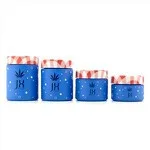

Thermal stability of glass dropper bottles is one of the important properties
The property of the glass dropper bottle not to be destroyed by severe temperature changes becomes the thermal stability of the glass dropper bottle, that is, resistance to quenching and heat. The thermal stability of a glass dropper bottle is expressed as the temperature difference that the glass dropper bottle can withstand while remaining undamaged. Glass bottle manufacturers say that the thermal stability of glass bottles is one of the important properties of glass. Therefore, in the research and production of glass bottle manufacturers, most glass bottles are tested for this property, especially in the thermal processing of glass, it is particularly important to determine the thermal stability of glass bottles. The determination of this property is decisive for the production of glass dropper bottles and is an essential task.
The thermal conductivity of glass bottles is very poor, especially the glass bottles under the greenhouse, which are locally heated and the heat transfer is very slow. This area is prone to overheating. When overheated to a certain extent, there is a possibility of cracking due to the uneven cooling and heating of the glass bottle. The material of the glass bottle is not like the material with good thermal conductivity, which has good thermal conductivity. For example, metallic materials have good thermal conductivity, even in localized heating of metallic materials.
The heat conduction speed of metal materials is fast, the local overheating phenomenon disappears quickly, and the thermal conductivity of metal materials is stronger than that of glass materials. The ability of a substance to transfer thermal energy to lower temperatures through particle vibration is called thermal conductivity. The thermal conductivity of various substances is represented by thermal conductivity.
Since the metallic glass is different from the glass bottle with its corresponding electron number and disordered structure, the thermal conductivity of the glass bottle which makes the thermal resistance increase is lower. Due to the transparency of the glass and the increased permeability of the radiant heat, the thermal conductivity of the glass bottle increases with the increase of the temperature at high temperature. Such as the glass bottle heated to the softening temperature of the glass at room temperature is almost doubled by heat, another example of the transparent glass is compared to the tinted molten glass, the thermal conductivity of the former is higher than that of the latter, in the production of glass, especially glass Melting crucible furnaces, at the same temperature, and of the same composition, are often more difficult than melting transparent glass bottles, because the thermal conductivity is less than that of a transparent colored glass bottle.