

Can Packaging Cure All Diseases? Eco Friendly Packaging Is The Real Cure
Introduction: In modern society, packaging has long been integrated into people's daily lives. Whether it is the bubble film in express parcels or the packaging bottles of cosmetics, packaging is indispensable. However, behind these convenient outer garments, plastic pollution, resource waste, and carbon emissions are becoming one of the main "causes" of global environmental problems. According to data, more than 300 million tons of plastic packaging are produced worldwide each year, of which about 80% cannot be recycled or reused and eventually become a source of pollution. At the same time, consumers' environmental awareness has gradually awakened, and "eco friendly packaging" has emerged as an effective way to treat this "disease".
New trend of green packaging: innovation and environmental protection go hand in hand
1. Dilemma of traditional packaging
●Resource waste
The use of a large amount of packaging materials, especially the production of disposable packaging, wastes a lot of natural resources. Plastic packaging is almost indecomposable, which leads to overcrowding of landfills.
●Environmental pollution
Plastics take a very long time to degrade in the natural environment, polluting soil, rivers and oceans. About 8 million tons of plastic waste enters the ocean every year, endangering the survival of marine life.
●Awakening of consumer awareness
The awakening of consumer environmental awareness has brought challenges and opportunities to the packaging industry. People hope to reduce the consumption of earth resources by choosing environmentally friendly packaging, while companies need to consider environmental impact while improving product competitiveness.

2. Innovative breakthroughs in green packaging
●Application of bio-based materials
In recent years, bio-based plastics have gradually replaced traditional petroleum-based plastics. Bio-based plastics use renewable resources such as plants, corn and sugar cane, which are not only degradable, but also reduce dependence on petroleum resources. They are widely used in food packaging.
●Eco friendly packaging
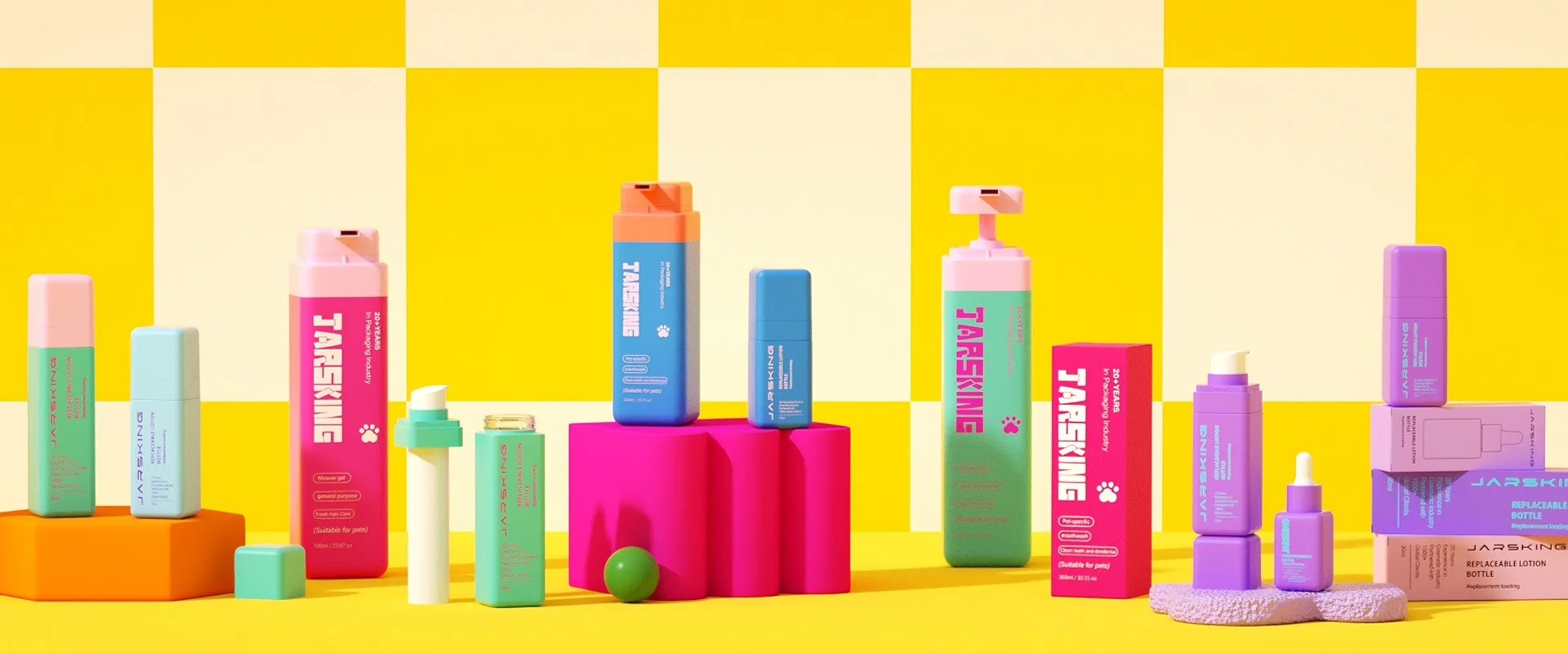
Reusable packaging has gradually become an important direction for environmentally friendly packaging. Consumers can reuse the packaging that comes with the products they purchase, reducing packaging waste. For example, Jiaxing Packaging's newly launched replaceable set bottles and cream jars can be reused by consumers after use.
●Degradable packaging materials
Various types of degradable packaging materials such as seaweed films and paper packaging have gradually emerged. These materials can degrade quickly in the natural environment, reducing the long-term impact of plastics on the environment. Some food packaging has adopted seaweed extracts as raw materials, which are both environmentally friendly and can ensure the freshness of the product.
3. Future trends of sustainable packaging
● Promotion of circular economy model
The application of circular economy concept in the field of packaging is also gradually strengthened. By designing packaging forms that are easy to recycle and reuse, the use of disposable packaging can be reduced and resource waste can be reduced. For example, through the "Packaging as a Service" model, the packaging provided by the company can not only be recycled, but also reduce the demand for new resources through innovative means.
●Personalized and customized packaging
Against the background of growing personalized consumer demand, the personalization and customization of packaging design have become a new highlight of the packaging industry. Through innovative means such as 3D printing technology, Jiaxing companies can customize packaging according to consumer needs while reducing packaging waste.
Eco friendly packaging innovation under the plastic ban
The global "plastic ban" has been introduced one after another, which not only forces companies to adjust their product packaging strategies, but also promotes the development of sustainable packaging technology. In order to adapt to these new policies, companies have begun to turn to recycled packaging and innovative designs, striving to find a balance between environmental protection and profits.
1. The promotion of the global plastic ban
●EU plastic ban policy
In 2021, the EU completely banned disposable plastic products, such as plastic straws, plastic knives and forks, and required all plastic packaging to meet recycling standards.
●China's plastic ban policy
China has implemented the "plastic ban" since 2020, clearly proposing to gradually ban the production and sale of disposable plastic products, while promoting the use of degradable plastics and circular economy materials.
●The effect of the plastic ban
Although the implementation of the plastic ban will increase the production costs of enterprises in the early stage, in the long run, it will enable enterprises to turn to more sustainable and innovative packaging forms.

2. Sustainable packaging innovation in response to plastic bans
◆Recyclable packaging
Recyclable packaging is gradually becoming a new trend. By designing packaging that is easy to recycle, companies can reduce waste of resources and reduce environmental pollution. For example, Jiaxing Packaging has launched recyclable glass bottle packaging, which consumers can recycle and reuse through the recycling system.
◆Research and development of environmentally friendly alternative materials
With the advancement of technology, more and more innovative environmentally friendly alternative materials have emerged. For example, using natural materials such as bamboo to make packaging can not only ensure the functionality of the packaging, but also reduce dependence on earth resources.
3. Challenges and opportunities brought by the plastic ban
◆ Increased production costs
The research and development of degradable materials and innovative packaging often requires high costs, which puts a lot of pressure on many small and medium-sized enterprises. In addition, the production process of degradable materials is different from that of traditional plastics, and enterprises may need to transform equipment and technology.
◆ Consumer acceptance
Consumers have different perceptions and acceptance of environmentally friendly packaging. Many consumers have not yet fully adapted to the use of new materials, especially when the price of materials is high, which may lead to consumer resistance.
◆ Continuous changes in laws
The implementation time and scope of plastic bans in different countries are different, which makes companies face more complex compliance issues when dealing with regulations in different regions.
Eco friendly packaging revolution driven by consumers
With the rise of environmentally friendly consumption trends, consumers are increasingly inclined to choose sustainable and environmentally friendly products when purchasing goods. Packaging, as the first impression of consumers when purchasing goods, has become an important battlefield for brand competition.
1. Awakening of consumers' environmental awareness
◆ Environmental pollution and consumer awareness
As environmental problems such as plastic pollution and climate change become increasingly serious, consumers' environmental awareness is gradually awakening. According to research, 80% of consumers prefer to buy products with environmentally friendly packaging.
◆ Consumers' environmentally friendly choices
Consumers not only pay attention to the environmental friendliness of the product itself, but also care about the sustainability of the packaging. More and more consumers are willing to pay higher prices for environmentally friendly packaging to support brands that promote green concepts.
◆ Environmental protection and brand loyalty
Consumers' loyalty to environmentally friendly brands is increasing. Those environmentally friendly brands that are committed to sustainable development can win the trust of consumers.
2. How do companies respond to consumer demand?
◆ Innovative packaging design
Companies meet consumer demand by designing simpler and more environmentally friendly packaging, reducing the use of materials, and using degradable or recyclable materials.
◆ Transparency and certification
Consumers' requirements for environmentally friendly packaging are not limited to appearance design. They also require companies to provide higher transparency. Through environmental certification and third-party certification, companies can prove to consumers that their products and packaging are environmentally friendly, thereby increasing consumer trust.
◆ Education and communication
Companies also need to strengthen communication with consumers, popularize knowledge about environmentally friendly packaging to consumers through marketing activities, social media and other platforms, and help them better understand the advantages and importance of sustainable packaging.

The promotion of sustainable packaging is not only a transformation of the industry, but also a reflection of everyone's environmental responsibility. With the development of technology and the awakening of consumer awareness, green packaging is becoming a new market demand and social trend. Enterprises, designers, consumers and governments need to work together to promote the packaging industry to a greener, more environmentally friendly and sustainable direction. The packaging of the future is no longer a simple container. It will carry the balance of society, environment and economy, and become an important part of achieving sustainable development.
Green packaging is not only a protection of the environment, but also a commitment to the future lifestyle. It builds a cleaner and smarter world for us and becomes an important step in achieving sustainable development goals.
Conclusion: It is not empty talk to cure all diseases with "packages". Sustainable packaging is an important means to truly cure environmental problems. By changing the way of thinking, enterprises can not only enhance their own competitiveness, but also contribute to the future of the earth. In this process, every enterprise plays an indispensable and important role.


