
Why Are Your New Product Launches Always Delayed?
This is a real situation that many brands have experienced firsthand.
With six months to go before Singles' Day, a certain brand thly-except for the packaging materials, which remain in the supplier's "in production" stage.has completed all preliminary preparations: formula finalization, marketing plan confirmation, KOL cooperation agreement signing, creative material production completed, and social media scheduling finalized until the end of November. The project is progressing smoo
The project manager followed up multiple times, only to be told that "it's being expedited," followed by "T2 samples are being inspected." Weeks passed, and ultimately, the year's most valuable commercial milestone ended before the product even hit the shelves. Direct revenue losses amounted to millions, and the damage to brand momentum was even more difficult to quantify.
This is not an isolated case. Data shows that 67% of delays in new beauty product launches are directly caused by delays in packaging material delivery-rather than formula development, marketing, or the raw material supply chain. The bottle, cap, and outer packaging-the physical carriers that consumers first come into contact with-are precisely the most vulnerable part of the launch plan.
For brand managers, the real issue isn't the loss itself, but whether such delays are predictable and controllable. This leads to the core question of this article: Can the delivery time of cosmetic packaging materials truly be systematically controlled?
The answer is yes. But the prerequisite is that we must first clarify the root cause of its repeated loss of control.
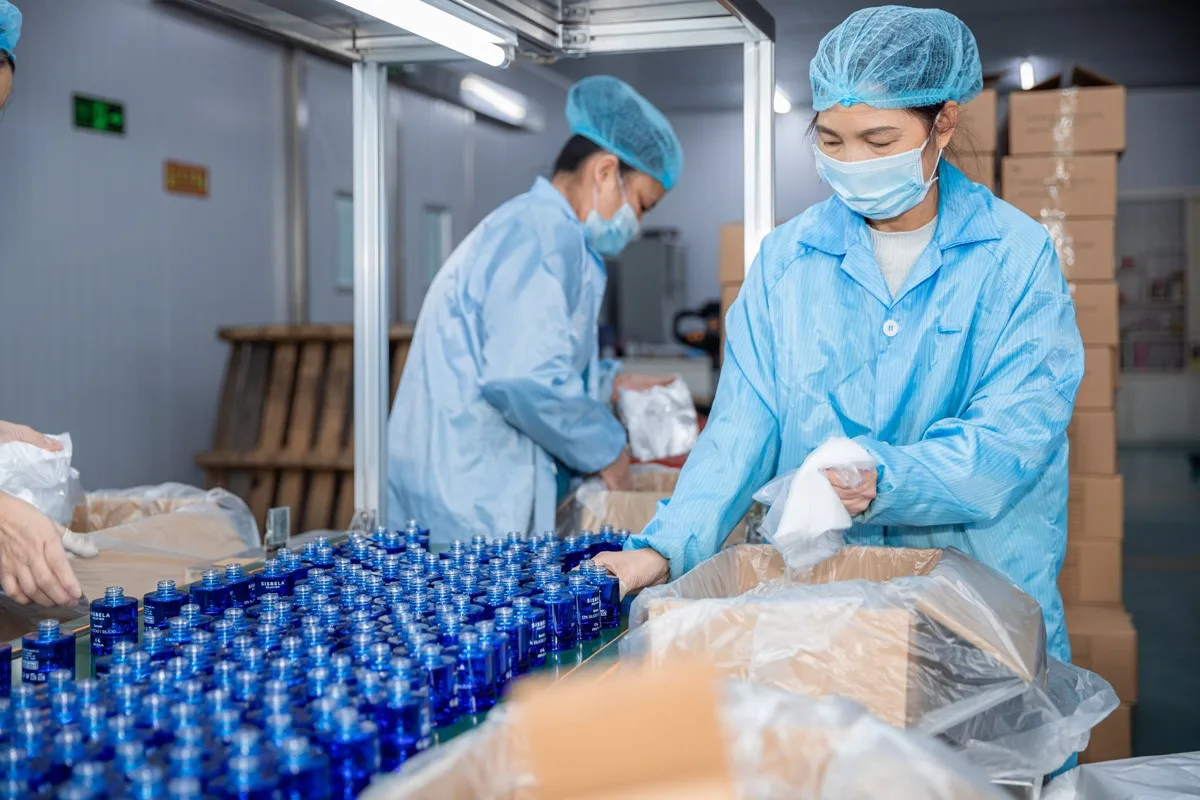
Your imagined timeline for packaging materials vs. the actual timeline that exists in reality.
Most brand teams make the same fundamental mistake when initiating new product planning: assuming that delivery time equals production cycle. If production takes four weeks, then placing an order a month in advance seems logical, right?
Wrong. This judgment is flawed because it compresses a complex, multi-stage system into a single variable. What the brand sees as "production" is only the middle segment of the entire supply chain-before it, there's a long preparation period; after it, there's an equally long transportation period. The true delivery time formula for cosmetic packaging materials should be as follows:
Actual delivery time = Communication and confirmation + Mold making + Initial sampling + Sample revision rounds + Mass production + International shipping
Each step has its own risks of delay, dependencies, and points of loss of control. More importantly, these steps are sequential, not parallel-if one step is not completed, the next step cannot start. Delays at any point will have a multiplier effect on the final delivery date.
When you compare the actual timeline with the brand's subjective estimates, the difference is staggering:
|
Link |
Brand estimated time |
Actual time required |
|
Design communication and confirmation |
3 days |
7–14 days |
|
New mold development |
2 weeks |
45–90 days |
|
First Prototype (T1) |
1 week |
10–21 days |
|
Sample modification and confirmation |
3 days |
7–30 days (multiple rounds) |
|
Mass production |
2 weeks |
3–5 weeks |
|
Sea freight to port |
2 weeks |
25–35 days |
|
total |
Approximately 50 days |
120–210 days |
Behind each row of this table lies the underlying logic of the delays, which deserves to be analyzed one by one:
Design Communication and Confirmation (7–14 days):
Brands often believe that issuing a design draft equates to completion. However, this stage actually involves multiple rounds of cross-communication between the brand's creative team and the supplier's technical engineers: process feasibility assessment, material compatibility confirmation, dimensional tolerance verification, and repeated negotiations on the gap between the "design intent" and the "mass-producible structure." Time zone differences, language barriers, and discrepancies in understanding details between the two parties all silently consume time during this stage.
New mold development (45–90 days)
is the most easily underestimated and least compressible part of the entire process. From 3D modeling to steel procurement, from CNC precision machining to heat treatment and polishing, and then to T1 sample demolding and dimensional inspection, each step has strict process requirements and physical time limits. Any deviation-even a 1.5mm difference in the bottle shoulder curvature-means re-molding and resetting the entire cycle. The industry average mold opening cycle is 60–90 days, and complex irregular structures can easily exceed 90 days.
Initial Prototype (T1) (10–21 days):
After the T1 sample is completed, it needs to undergo internal quality inspection at the factory before being shipped to the brand via international express. One-way shipping typically takes 5–10 business days. After receiving the sample, the brand also needs to conduct internal reviews: the design team checks the appearance, the R&D team verifies the structure, and sometimes actual filling tests are required. This process can take anywhere from 3 days to 1–2 weeks.

Sample modification and confirmation (7–30 days, multiple rounds)
is the most unpredictable stage because its duration depends entirely on the number and complexity of the issues. Each round of modification feedback, from the brand's initial request to the supplier's understanding, implementation, re-sampling, and reshipment, takes at least 7–10 days. If structural issues arise (such as uneven wall thickness or mismatched neck specifications), requiring mold rework, this round's waiting time can jump directly to over 30 days. Projects undergoing more than three rounds of modifications are not uncommon in the industry.
mass production (3–5 weeks)
does not mean it will start immediately. Suppliers' production schedules are usually filled weeks or even months in advance, and brand orders will be queued after "signing the mass production confirmation and paying the deposit". The actual start of production may be 1–2 weeks later than expected, and the entire production cycle fluctuates between 3–5 weeks depending on the order size.
Sea freight arrival (25–35 days):
Many brands estimate sea freight time as "approximately two weeks" when planning, but this is only the shipping time itself. The complete sea freight cycle also includes: factory container loading and preparation (3–5 days), port customs clearance and waiting for cargo space (3–7 days), sea transport (14–21 days), destination port customs clearance (3–7 days), and final inland transport to the warehouse (1–3 days). Congestion or document problems at any stage will further extend the entire timeline.
In summary, under ideal circumstances without any unforeseen events, a packaging project involving entirely new custom molds will take at least 120 days from the start of design communication to the arrival of goods at the brand's warehouse, typically 150–180 days, and may exceed 210 days if there are multiple revisions or shipping delays.
Standard packaging materials (such as PP cans and PE pipes) typically take 4–6 weeks under ideal conditions; while custom designs-embossed glass bottles, metallic finishes, irregular shapes-can take 8–12 weeks just for production, not including shipping time. If you add in the need for entirely new molds, you'll almost certainly end up at the very end of the 120–210 day range.
There's only one conclusion: most brands aren't planning their packaging; they're managing the illusion of time. Truly effective release pacing management must begin with a re-evaluation of the actual timeline.
Why is mold making so slow?
Everything begins before any steel is even cut. First, the brand's design concept needs to be translated into precise 3D technical drawings-a process that involves back-and-forth communication between the brand's creative team and the supplier's engineering department, often requiring multiple rounds of revisions. After the digital design is confirmed, the mold manufacturer also needs to procure the appropriate grade of mold steel; this procurement step alone can take 1–2 weeks, depending on material inventory.
The next stage is CNC (Computer Numerical Control) precision machining: automated cutting equipment carves the mold cavity into the steel according to the required precision, with tolerances measured in millimeters. After machining, the mold needs to undergo heat treatment to harden the steel, followed by manual polishing to achieve the required surface finish. Only after completing these steps can the first test sample (T1) be produced and shipped to the brand for review.
During the T1 review phase, any deviation from the design intent will trigger the restart of the entire correction cycle. A 2mm difference between the bottle shoulder curvature and the rendering, a 0.3mm loose fit of the cap, an uneven bottom... each problem means mold modification, reprocessing, repolishing, and another sample shipment. The industry average new mold development cycle is 60-90 days ; the more complex the design and the more irregular the shape, the longer this timeline will be.
Hidden Costs No One Tells You
Besides the time involved, custom mold making also carries considerable financial risks:
Standard glass bottle mold: Approximately RMB 20,000–100,000 (approximately $3,000–$15,000)
Complex, irregularly shaped bottles: $20,000 and above
Hidden costs: mold modification fees for each round of revisions, international sample courier fees (round trip), and time costs associated with repeated communication with engineers.
5 unexpected delivery time killers for beauty brands
Custom mold making is the most obvious enemy, but it's by no means the only one. Looking at hundreds of failed beauty product launches, the same five out-of-control patterns repeatedly appear-each one silently wasting weeks of your time.
① Lack of transparency in supplier scheduling
Symptom: You placed an order, and the supplier said it was "in production." What they didn't tell you was that you were number 47 in line.
Consequences: Mass production is delayed by 2-4 weeks without any warning. You only find out it hasn't even started when you try to urge them to ship.
The root cause: Small and medium-sized packaging material suppliers generally lack a capacity visualization system. There are no dashboards, no order tracking, and no proactive early warning mechanisms. Your order exists in some spreadsheet-somewhere.
② The time black hole of cross-border prototyping
Symptoms: Each round of physical samples takes 5–10 business days to travel between your office and overseas factory.
Consequence: Three rounds of revisions and feedback = 30–60 days wasted, all spent waiting for the delivery status.
The root cause is that the industry still relies heavily on exchanging physical samples to confirm design solutions. Without digital prototyping tools-such as high-precision 3D renderings that can be reviewed and confirmed on a screen-every round of revisions becomes a logistical issue, not just a design one.
③ The delivery dates of supporting materials are not synchronized.
Symptom: The glass bottle arrived on time. The matching pump head and aluminum cap will take another three weeks.
Consequences: The filling line could not be started, the finished products could not be assembled, and the entire production plan was brought to a complete standstill because of a part worth less than 1 yuan.
The root cause: Most brands source packaging components from multiple suppliers-glass bottles from supplier A, caps from supplier B, and outer boxes from supplier C. Each supplier has its own production schedule, its own delay logic, and its own definition of "on time." Without a unified and coordinated supplier management system for all components, mismatches are almost inevitable.
④ Lack of compliance certification documents
Symptoms: Goods arrive at a US or EU port. Customs requires an SGS test report, a REACH declaration of conformity, or FDA material safety certification. Your supplier has never prepared these.
Consequences: Customs clearance delays of 2–3 weeks. In the worst-case scenario, goods may be detained for an extended period or returned via the original route.
The root cause: Many overseas packaging suppliers are unfamiliar with the regulatory requirements of their target markets. Unless brands explicitly state compliance requirements when placing orders and confirm that suppliers hold the relevant certifications, documentation gaps are almost inevitable surprises.
⑤ The brand's internal approval chain is too long.
Symptoms: Samples have arrived and are in good condition. However, before mass production can begin, these samples need to be reviewed by the CEO, design director, and legal department in sequence, with each level taking at least one week.
Consequences: What should have been a 3-day confirmation process turned into a 3-week wait. The supplier's production schedule was filled with other orders, and you were put back at the end of the queue.
The root cause: Most brands have never established a formal SOP for packaging approval. Without predefined decision-making authority, clear review timelines, and documented escalation paths, every approval process becomes a renegotiation-and negotiations consume time that your release schedule simply cannot afford.
How do high-speed beauty brands achieve this? 3 proven strategies for shortening delivery times.
Brands that consistently release on time aren't just lucky; they have a different structure. They make thoughtful decisions regarding supplier selection, process design, and tool application, eliminating delivery risks before they accumulate. Here are three truly effective strategies.
Strategy 1: Prioritize the use of readily available patented molds to completely bypass the mold-making cycle.
The most effective way to shorten the lead time for cosmetic packaging is to directly eliminate the biggest time-consuming aspect: custom mold making. Suppliers like Guangzhou Bowei Packaging Products Co., Ltd. maintain a library of over 1,000 in-stock patented molds, covering all categories including serums, lotions, essential oils, and cushion compacts.
By using readily available molds and combining them with customized surface treatments-hot stamping, silkscreen printing, electroplating, and custom colors-brands can achieve true visual differentiation without waiting for any mold development time. The traditional 60-90 day mold opening cycle is reduced to zero days, allowing direct entry into mass production.
This is not a compromise. High-end surface treatment processes can make a bottle shape from a stock mold look completely unique. The brand logo, color scheme, and texture are all one-of-a-kind; it's just that the underlying form has already been designed by engineers and is ready to use. For brands that need to keep up with aggressive release schedules, or for brands that release trend-driven products with extremely limited market windows, this is not only a time-saving tool, but also a strategic advantage.
Strategy 2: Replace physical prototyping with 3D digital rendering
Each round trip for physical samples takes at least 10–14 days one way-not including the brand's review process. For a brand that went through three rounds of revisions, just waiting for the delivery took a month and a half.
The solution is to move the design approval process upstream, using photorealistic 3D renderings to drive approval decisions. High-precision digital rendering allows brand teams to evaluate proportions, surface finishes, label typography, and structural details on screen, making immediate modifications instead of waiting for physical samples to arrive.
Suppliers with professional in-house 3D rendering capabilities-such as companies with 30 or more designers and a dedicated rendering team-can typically reduce the design confirmation cycle from over 30 days to 5–7 days. Physical prototyping is reserved only for the final approval stage before mass production, at which point the design is completely finalized. The end result: fewer rounds of revisions, faster decision-making, and a significantly shortened path from concept to confirmed specifications.
Strategy 3: Choose suppliers with overseas warehouses to eliminate cross-border logistics bottlenecks.
Even after production is complete, international shipping can cause delays of 25–35 days-a variable that most brands underestimate and almost no brand plans for seriously. A container traveling from Shenzhen to the Port of Los Angeles, clearing customs, and then being transported to a third-party warehouse can take a full month.
The structural solution involves partnering with suppliers who have physical warehouses in the destination country. When North American brands can ship directly from their local US warehouses, the 30-day sea freight window collapses into 72-hour local delivery. For brands in the Middle Eastern market, suppliers with warehouses in Dubai can offer the same level of speed advantage.
This model also offers flexibility. If the release date is temporarily adjusted by two weeks, brands that are picking up goods from local inventory can respond flexibly. Brands waiting for ocean-freight containers do not have this flexibility-the ship has already sailed away.
How Guangzhou Bowei Packaging Products Co., Ltd. helps beauty brands reduce lead times by 60%
When faced with packaging material delivery issues, most brands tend to look for solutions by addressing their own project management-by urging more frequently, following up more closely, and allowing more flexibility in scheduling. However, these efforts often yield little result because the root of the problem lies not with the brand, but with the supplier's infrastructure.
When a supplier lacks readily available molds, in-house design capabilities, local warehousing, and cross-market compliance experience, no matter how much pressure a brand applies, it's simply operating within a system with structural bottlenecks. Compressing delivery times requires a fundamental restructuring of the supply chain infrastructure, rather than relying on project management skills.
Guangzhou Bowei Packaging Products Co., Ltd.'s core value lies precisely in this. The following five capabilities are the specific reasons why Guangzhou Bowei Packaging Products Co., Ltd. can help brands reduce the traditional 150+ day packaging cycle to within 60 days:
✅ 1,000+ patented molds in stock - completely eliminates mold opening waiting time
Mold making is the biggest time drain in traditional packaging delivery, with an industry average cycle of 60–90 days, and even longer for complex and irregularly shaped structures. Through years of continuous investment in mold R&D, Guangzhou Bowei Packaging Products Co., Ltd. has established a product library of over 1,000 in-stock patented molds, covering all categories, forms, and specifications of products such as serum bottles, lotion pump bottles, essential oil dropper bottles, cushion compacts, face cream jars, and lip products.
Once a brand selects an in-stock mold, it can skip the entire mold development phase and directly proceed to surface treatment and mass production. Through a combination of customized surface treatments such as hot stamping, silkscreen printing, electroplating, spraying, and gradient colors, brands can achieve highly differentiated visual presentations based on standard molds without incurring any mold opening time or costs.
Actual impact on delivery time: The mold-making stage, which originally took 60–90 days, has been reduced to zero. The waiting time for brands from signing an order to entering mass production has been reduced from several months to zero.
✅ 30+ Designers + Professional 3D Rendering Team - Replacing Physical Prototyping with Digital Confirmation
Traditional packaging material confirmation processes heavily rely on cross-border express shipments of physical samples. Each round of physical sample transportation takes 5–10 business days one way, and three rounds of revisions mean that at least 30–60 days are wasted on logistics waiting, rather than actual design optimization.
Guangzhou Bowei Packaging Products Co., Ltd.'s in-house design team of over 30 people, coupled with a professional 3D rendering engine, enables them to quickly output photorealistic renderings after receiving brand creative direction. The renderings accurately reproduce the bottle shape, surface gloss, hot stamping effect, label layout, and actual usage scenarios. The brand team can directly review and annotate their feedback on the screen and receive the revised version within the same business day.
The entire design verification process is completed in a closed loop on the digital end. Physical prototyping is only used for final structural verification before mass production, rather than as a design iteration tool.
Actual impact on delivery time: The design confirmation cycle has been shortened from the traditional 30 days or more to 5–7 days, a reduction of up to 80%. The cross-border round-trip time for multiple rounds of physical prototyping has been completely eliminated.
✅ 80+ production lines - No order backlog, guaranteed production capacity
One of the core pain points for many small and medium-sized packaging material suppliers is the lack of transparency in production scheduling. After a brand places an order, when the order actually enters the production line depends entirely on the supplier's current order backlog, which the brand is often completely unaware of.
Guangzhou Bowei Packaging Products Co., Ltd. currently operates over 80 professional production lines, covering the entire process from glass blowing and injection molding to metal stamping and surface treatment, with a monthly production capacity exceeding 90 million sets. This scale means that once Guangzhou Bowei Packaging Products Co., Ltd. receives an order from a brand, it can start production on time at the confirmed deadline, without the brand having to spend weeks waiting for a scheduling deadline.
In addition, Guangzhou Bowei Packaging Products Co., Ltd. provides partner brands with a weekly production progress reporting mechanism, with key milestones synchronized in real time, so that brands do not have to passively wait for vague feedback such as "we are rushing to meet the deadline".
Actual impact on delivery time: Eliminates random delays of 2–4 weeks caused by supplier capacity congestion, making bulk production nodes predictable, traceable, and manageable.
✅ Dual overseas warehouses in the US and Dubai-local shipping eliminates uncertainty in cross-border logistics.
Even if packaging production is perfectly on time, international sea freight remains the last and often the most unpredictable source of risk in the delivery process. The complete sea freight cycle from the Chinese factory to the brand's warehouse in North America typically takes 25–35 days, and is subject to multiple variables such as port congestion, customs clearance time, and inland transportation, making delays highly probable.
Guangzhou Bowei Packaging Products Co., Ltd. has dedicated overseas warehouses in the US (serving the North American market) and Dubai (serving the Middle East and Europe), providing local inventory for its core SKUs with high sales volume. North American brands can pick up goods directly from their US warehouses, eliminating the need for cross-border shipping, with normal delivery times within 72 hours.
For brands with seasonal release needs or those requiring rapid replenishment, the overseas warehouse model offers significant flexibility: there is no longer a need to reserve a 30-day sea freight buffer for each release, greatly expanding the room for adjustment in release plans.
Actual impact on delivery time: The 25–35 day sea freight window is compressed into 72-hour local delivery, completely eliminating the uncertainty of the last mile.
✅ 10,000+ Global Brand Partnerships – Compliance documents prepared in advance, zero customs clearance obstacles.
Packaging materials entering major markets such as Europe, the United States, and the Middle East often require a series of compliance certification documents: SGS material safety test reports, EU REACH compliance declarations, relevant US FDA material certifications, and specific environmental or heavy metal test reports for the target market. Many suppliers are unfamiliar with these requirements and often only prepare them at the last minute when brands inquire, resulting in customs clearance delays of 2-3 weeks, and in serious cases, goods may even be detained or returned.
With experience working with over 10,000 brands globally, Guangzhou Bowei Packaging Products Co., Ltd. has a thorough understanding of packaging regulatory requirements in major target markets such as North America, the EU, the Middle East, and Southeast Asia. During the order placement phase, Guangzhou Bowei Packaging Products Co., Ltd. proactively verifies the brand's target sales regions and prepares and provides all necessary certification documents in advance, rather than reactively responding after the goods arrive at port.
Actual impact on delivery time: Potential delays of 2–3 weeks in customs clearance are eliminated in advance, and brands do not incur any additional waiting costs due to missing documents.
These five capabilities do not exist in isolation; together they constitute a delivery management system covering the entire lifecycle of packaging materials: from design confirmation to mold preparation, from mass production to local delivery, from compliance documents to customs clearance, every traditional "waiting node" has a corresponding structural solution within Guangzhou Bowei Packaging Products Co., Ltd.'s infrastructure framework.
Brands that previously required over 150 days to complete packaging material delivery have now, by combining and applying the above capabilities, consistently reduced their overall packaging material delivery cycle to under 60 days. This is not merely an optimization at the project management level, but a qualitative leap at the supply chain infrastructure level.


